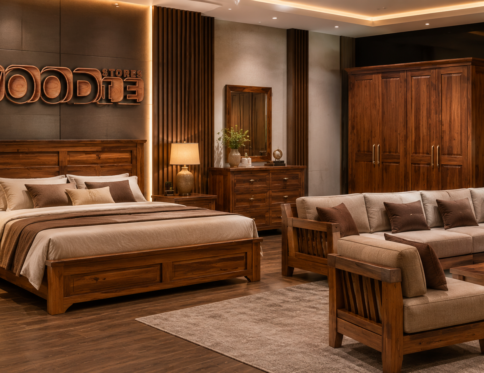
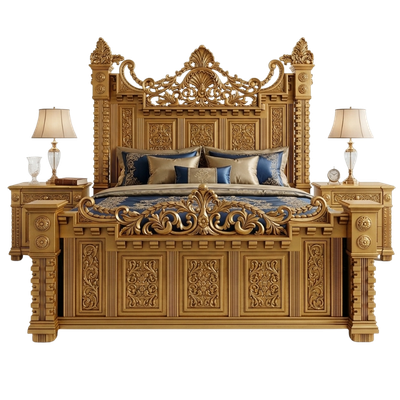
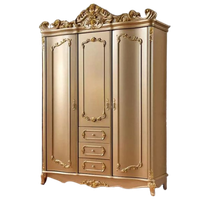
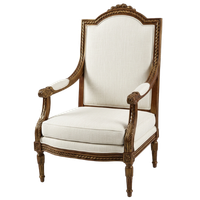
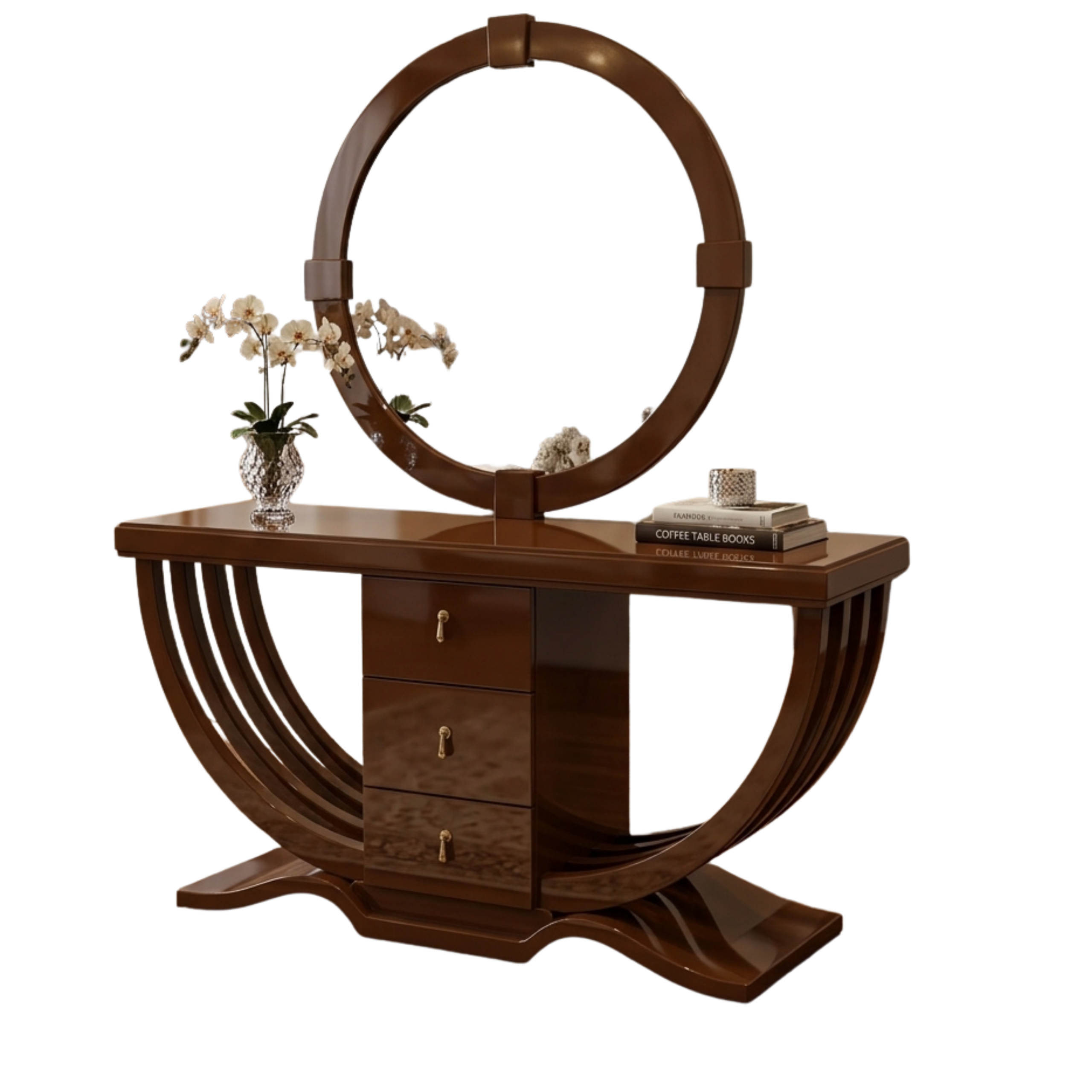
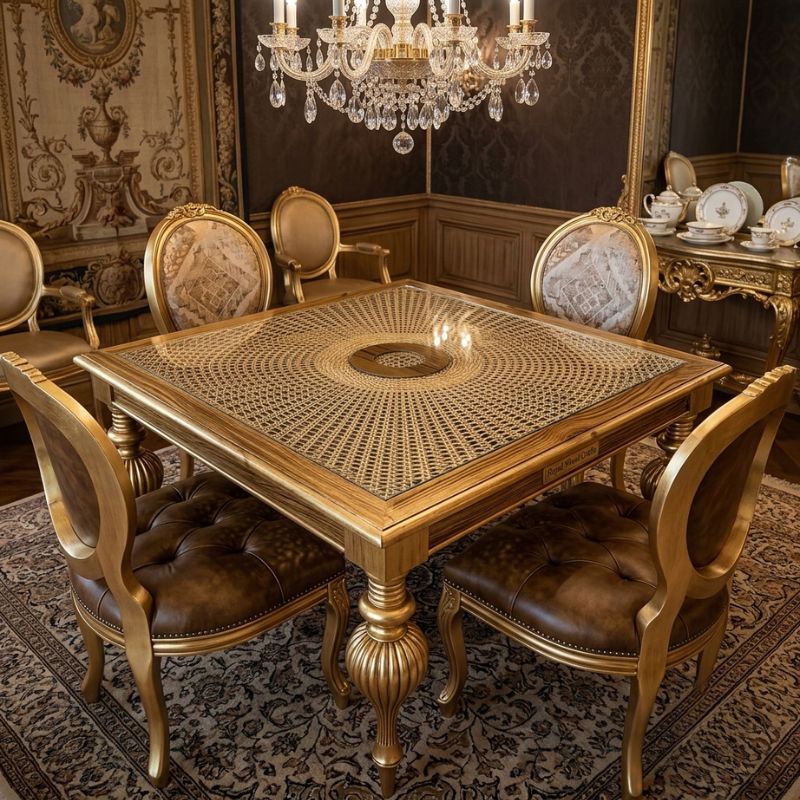
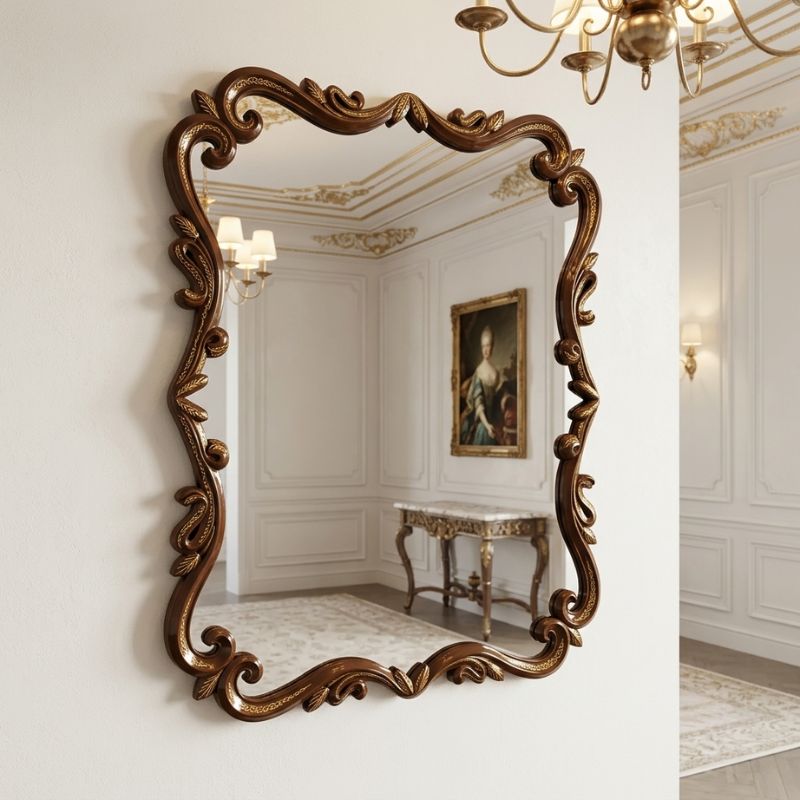
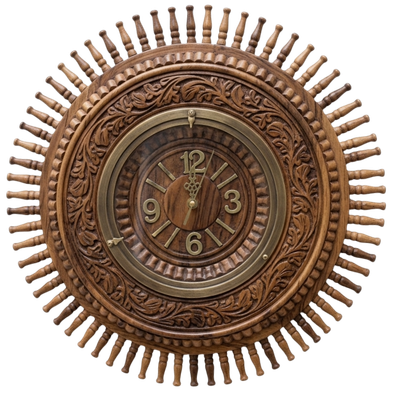
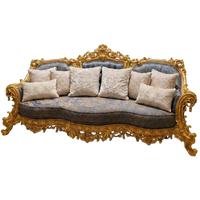
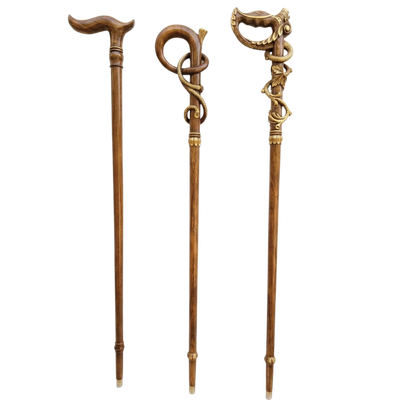

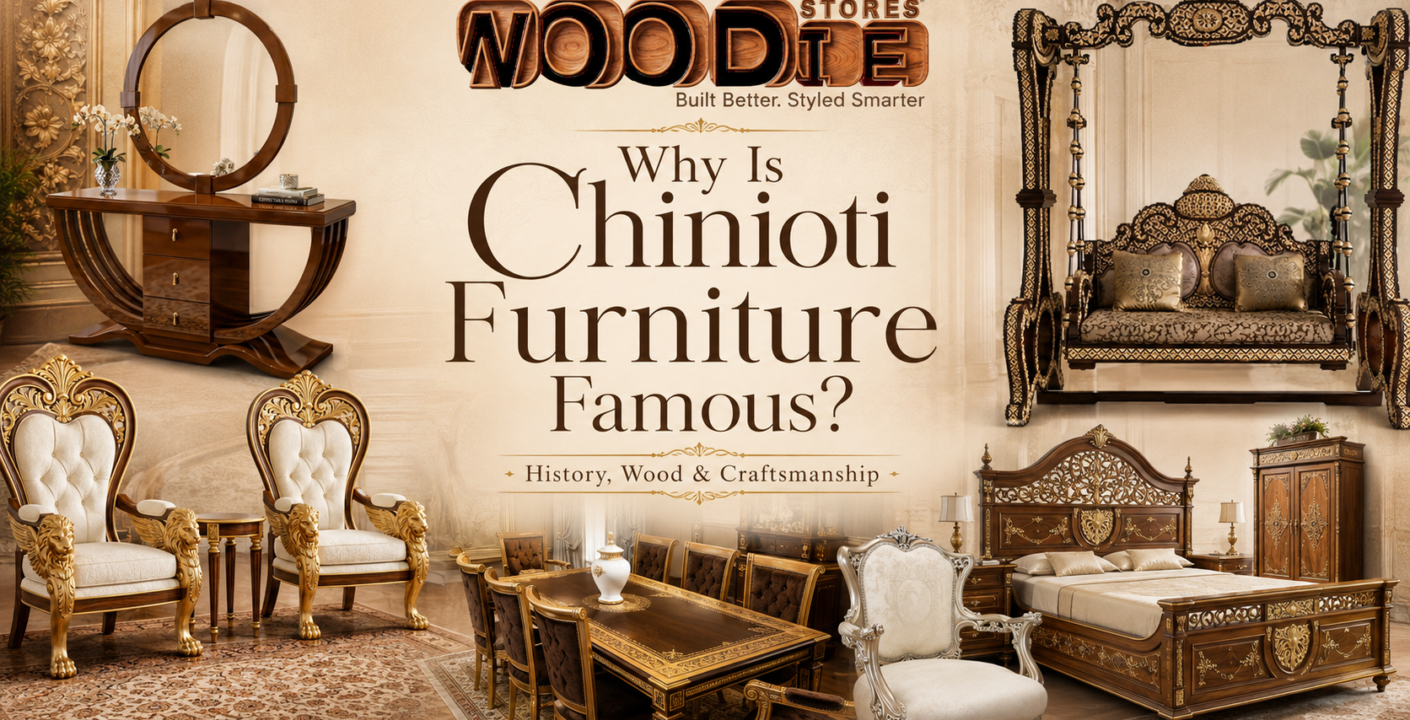

Chinioti furniture is one of the most recognizable forms of traditional wooden furniture in Pakistan. Known for detailed carving, substantial wooden construction, decorative patterns and skilled handwork, it has become closely associated with the city of Chiniot in Punjab.
So, why is Chinioti furniture famous?
The simple answer is that Chinioti furniture combines a long woodworking tradition with skilled carving, carefully finished wood and distinctive decorative designs. Chiniot itself is officially recognized for its woodwork, handcrafted furniture and intricately carved architecture, while Punjab’s tourism policy also identifies the city with wood-furniture carving.
For buyers interested in traditional Pakistani furniture, understanding the history, materials and craftsmanship behind Chinioti furniture can make it easier to distinguish genuine quality from furniture that simply uses the name as a marketing label.
What Is Chinioti Furniture?
Chinioti furniture refers to wooden furniture associated with the woodworking traditions of Chiniot, a historic city in Punjab, Pakistan.
It is especially recognized for decorative hand carving and detailed furniture forms. Common pieces include:
- Bed sets
- Sofa sets
- Dining tables
- Chairs
- Wardrobes
- Dressing tables
- Console tables
- Wooden swings or jhulas
- Cabinets
- Decorative wooden pieces
The Tourism Development Corporation of Punjab describes Chiniot as a city celebrated for exquisite woodwork, handcrafted furniture and intricately carved havelis, highlighting the long connection between the city and skilled wood craftsmanship.
Why Is Chiniot Famous for Furniture?
Chiniot has developed a strong identity as one of Pakistan’s important furniture-making centres.
Its reputation is not based only on selling furniture. The city’s distinctive value comes from the concentration of craftsmen who specialize in shaping, carving, assembling and finishing decorative wooden pieces.
The Government of Punjab has also recognized the economic significance of Chiniot’s furniture industry. Discussions around promoting Chiniot as a furniture city and improving infrastructure for the industry demonstrate how closely the city is connected with furniture production.
Over time, this concentration of craftsmen, workshops and furniture businesses has helped create an ecosystem in which woodworking knowledge is passed from one generation to another.
A Brief History of Chinioti Wood Craftsmanship
Woodworking has been associated with Chiniot for generations, and the city’s architectural heritage also demonstrates a tradition of decorative craftsmanship.
Historical buildings in Chiniot are known for carved architectural details, while modern furniture workshops continue to use floral, geometric and ornamental patterns in beds, sofas, chairs, swings and cabinets.
Rather than thinking of Chinioti furniture as one single design style, it is more accurate to see it as a craft tradition that has evolved over time.
Traditional designs may feature elaborate carving and heavy decorative elements, while newer Chinioti furniture can combine classic woodwork with:
- Modern upholstery
- Gold or silver finishing
- Minimal polish
- Contemporary silhouettes
- Custom room dimensions
- Modern fabrics
This ability to adapt traditional woodworking to changing interior styles is one reason Chinioti furniture continues to attract buyers.
What Wood Is Used in Chinioti Furniture?
One of the most commonly associated woods is Sheesham, a hardwood widely used in Pakistani furniture production.
Sheesham is popular for furniture because it offers:
- Visible natural grain
- Good structural strength when properly selected and prepared
- Suitability for carving
- Ability to accept polish and stain
- A substantial natural-wood appearance
- Repair and refinishing potential
Sheesham is particularly suitable for furniture where the wooden frame itself is part of the visual design.
However, buyers should never assume that every product marketed as Chinioti furniture is automatically made entirely from solid Sheesham wood.
A product may potentially include different materials in different parts.
Before purchasing, always ask:
- Is the frame solid Sheesham?
- Is plywood used anywhere?
- Is MDF or engineered board used?
- What material is used in the back panels?
- What wood is used inside drawers?
- Is the furniture seasoned?
- Is the quoted price for solid wood construction?
Clear specifications are more reliable than labels alone.
Why Is Sheesham Suitable for Chinioti Carving?
Traditional Chinioti furniture often contains carved floral, geometric and decorative patterns.
A carving wood must be workable enough for artisans to shape while still being structurally suitable for the finished furniture.
Sheesham is commonly chosen because it can hold decorative detail while also producing an attractive natural surface after sanding and polishing.
This makes it suitable for:
- Carved bed headboards
- Sofa frames
- Chair arms
- Decorative legs
- Wardrobe doors
- Console-table fronts
- Jhula frames
- Borders and panels
The final result still depends heavily on wood quality, seasoning, carving skill and finishing.
What Makes Chinioti Furniture Craftsmanship Different?
The strongest feature of Chinioti furniture is usually not the wood alone.
It is the craftsmanship applied to the wood.
A quality furniture piece can pass through several stages before completion.
1. Wood Selection
The first step is selecting suitable timber for the product.
Different furniture components require different board thicknesses and wood sections.
A large bed frame, for example, needs stronger structural components than a small decorative table.
2. Wood Preparation
Wood should be properly prepared before furniture production.
Moisture and poorly prepared timber can contribute to problems such as:
- Warping
- Cracking
- Joint movement
- Changes in shape
This is why buyers should ask suppliers how the wood has been seasoned and stored.
3. Frame Construction
Before decoration begins, craftsmen construct the structural frame.
This stage is particularly important for:
- Beds
- Sofas
- Dining chairs
- Swings
- Wardrobes
Decorative carving cannot compensate for weak joinery or poor construction.
4. Hand Carving
This is one of the features most strongly associated with Chinioti furniture.
Artisans may carve:
- Flowers
- Leaves
- Vines
- Geometric patterns
- Borders
- Traditional motifs
- Ornamental crests
Hand carving gives each furniture piece subtle differences.
That variation is part of the handcrafted character.
5. Sanding and Surface Preparation
After carving and construction, the surface must be carefully prepared.
This helps:
- Smooth rough areas
- Refine carved details
- Prepare the grain
- Improve the final polish
6. Polish and Finish
The furniture can then receive a finish according to the required style.
Common looks may include:
- Natural wood polish
- Dark walnut tones
- Medium brown polish
- High-gloss finish
- Matte finish
- Gold detailing
- Silver detailing
The finish can significantly change the appearance of the same carving.
7. Upholstery
Sofas, chairs and upholstered beds may also require:
- Foam
- Fabric
- Buttons
- Decorative trims
- Cushions
This allows traditional wooden carving to be combined with modern interior colors.
What Designs Make Chinioti Furniture Famous?
The popularity of Chinioti furniture is strongly connected with its visual character.
Common design elements include:
Floral Carving
Flower and leaf motifs are among the most recognizable styles.
These patterns can appear on:
- Bed headboards
- Wardrobe doors
- Sofa frames
- Mirror frames
- Console tables
Geometric Patterns
Geometric carving can give traditional furniture a slightly more structured appearance.
Decorative Crests
Large beds, mirrors and chairs often use prominent decorative elements at the top of the design.
Carved Legs and Arms
Furniture legs, chair arms and sofa frames may receive individual carved details rather than remaining plain.
Traditional Jhula Designs
Wooden swings are another product strongly associated with decorative Pakistani craftsmanship.
Their posts, seat frames and upper sections can contain detailed carving.
Why Does Handcrafted Furniture Cost More?
Customers sometimes compare handcrafted Chinioti furniture with machine-manufactured or engineered-board furniture and notice a significant price difference.
Several factors can contribute to that difference.
Material Cost
Solid hardwood generally costs more than engineered panel materials.
Skilled Labour
Detailed carving can require substantial manual work.
Production Time
A heavily carved bed or sofa may require considerably more production time than a simple machine-cut design.
Customization
Custom sizes, carving, polish and upholstery all require additional planning and labour.
Finishing
Detailed carved surfaces can require more sanding and polishing than flat furniture panels.
Therefore, price should be evaluated against:
- Actual wood used
- Construction method
- Carving complexity
- Product size
- Finish
- Upholstery
- Customization
- Delivery requirements
Is All Chinioti Furniture Heavily Carved?
No.
Chinioti furniture does not have to be extremely ornate.
Modern buyers increasingly choose designs that combine:
- Solid wood
- Light carving
- Cleaner lines
- Neutral fabrics
- Natural polish
- Contemporary room layouts
This allows traditional craftsmanship to work in both classic and modern interiors.
A buyer can therefore choose anything from a heavily carved statement bed to a much simpler Sheesham console or chair.
Chinioti Furniture vs Factory-Made Furniture
Neither category is automatically better for every buyer.
The difference depends largely on your priorities.
Chinioti Handcrafted Furniture
Best suited to buyers who value:
- Natural wood
- Individual craftsmanship
- Decorative carving
- Customization
- Traditional character
- Long-term repairability
Factory-Made Panel Furniture
May suit buyers who value:
- Lower initial cost
- Uniform appearance
- Lightweight designs
- Modern flat surfaces
- Faster mass production
The important point is to compare materials and construction fairly rather than choosing purely based on appearance.
How to Check the Quality of Chinioti Furniture
Before placing an order, use this checklist.
Check the Wood
Ask what wood is used in:
- Main frame
- Panels
- Drawers
- Back
- Decorative pieces
Check the Construction
Inspect:
- Joints
- Frame alignment
- Furniture stability
- Drawer movement
- Door alignment
Check the Carving
Good carving should appear deliberate and clean.
Look for:
- Clear patterns
- Smooth carved edges
- Consistent depth
- Proper finishing
Check the Polish
Check for:
- Uneven coloring
- Rough areas
- Polish buildup
- Unfinished hidden surfaces
Confirm Dimensions
Never order large furniture based only on photographs.
Confirm:
- Width
- Height
- Depth
- Mattress size
- Door clearance
- Room dimensions
Get Specifications in Writing
For custom furniture, obtain written confirmation of:
- Material
- Dimensions
- Design
- Finish
- Fabric
- Price
- Production time
- Delivery
- Payment schedule
Is Chinioti Furniture Good for Modern Homes?
Yes, provided the design is selected according to the room.
A very heavily carved large bed may overwhelm a small minimalist bedroom, while a simpler Chinioti design can provide natural warmth without making the room visually crowded.
For modern interiors, consider:
- Lighter carving
- Natural or medium polish
- Neutral upholstery
- Simpler silhouettes
- Fewer decorative elements
- Correct furniture scale
The advantage of custom furniture is that traditional craftsmanship can be adapted to the customer’s space.
Why Chinioti Furniture Still Matters Today
The continued popularity of Chinioti furniture comes from the combination of local craft identity and practical furniture making.
Punjab’s official tourism resources still identify Chiniot with handcrafted furniture and woodwork, showing that the craft remains part of the city’s recognized cultural character today.
For buyers, that means Chinioti furniture can provide something different from standardized mass-market furniture: visible craftsmanship, natural-material character and the possibility of customization.
Frequently Asked Questions
Why is Chinioti furniture famous?
Chinioti furniture is famous for detailed wood carving, handcrafted construction, decorative designs and the long furniture-making tradition associated with Chiniot, Punjab.
Which wood is commonly used for Chinioti furniture?
Sheesham wood is commonly associated with traditional Pakistani carved furniture because of its grain, strength and suitability for decorative woodworking.
Is all Chinioti furniture made from solid Sheesham?
No. Materials can vary between manufacturers and products. Buyers should confirm the exact composition before ordering.
Can Chinioti furniture be customized?
Many furniture workshops offer customization of dimensions, polish, carving and upholstery. The available options depend on the manufacturer and design.
Is Chinioti furniture only traditional?
No. Chinioti craftsmanship can also be adapted to modern and contemporary furniture designs.
What should I check before buying Chinioti furniture?
Check the wood type, dimensions, construction, carving quality, polish, upholstery, price, warranty, production time and delivery terms.
Final Thoughts
Chinioti furniture is famous because it represents more than a furniture style. It reflects a woodworking tradition associated with Chiniot, where handcrafted furniture and intricate carving remain recognized parts of the city’s identity.
Its appeal comes from the combination of natural wood, skilled handwork, decorative design and customization.
For buyers in Pakistan, the best approach is to look beyond the word “Chinioti” and carefully verify the actual wood, construction, carving, finish and specifications of the furniture being offered.
At Woodie Stores, Chinioti-inspired and handcrafted wooden furniture can be positioned around exactly these qualities: genuine material information, clear specifications, skilled craftsmanship and designs suited to real homes.